
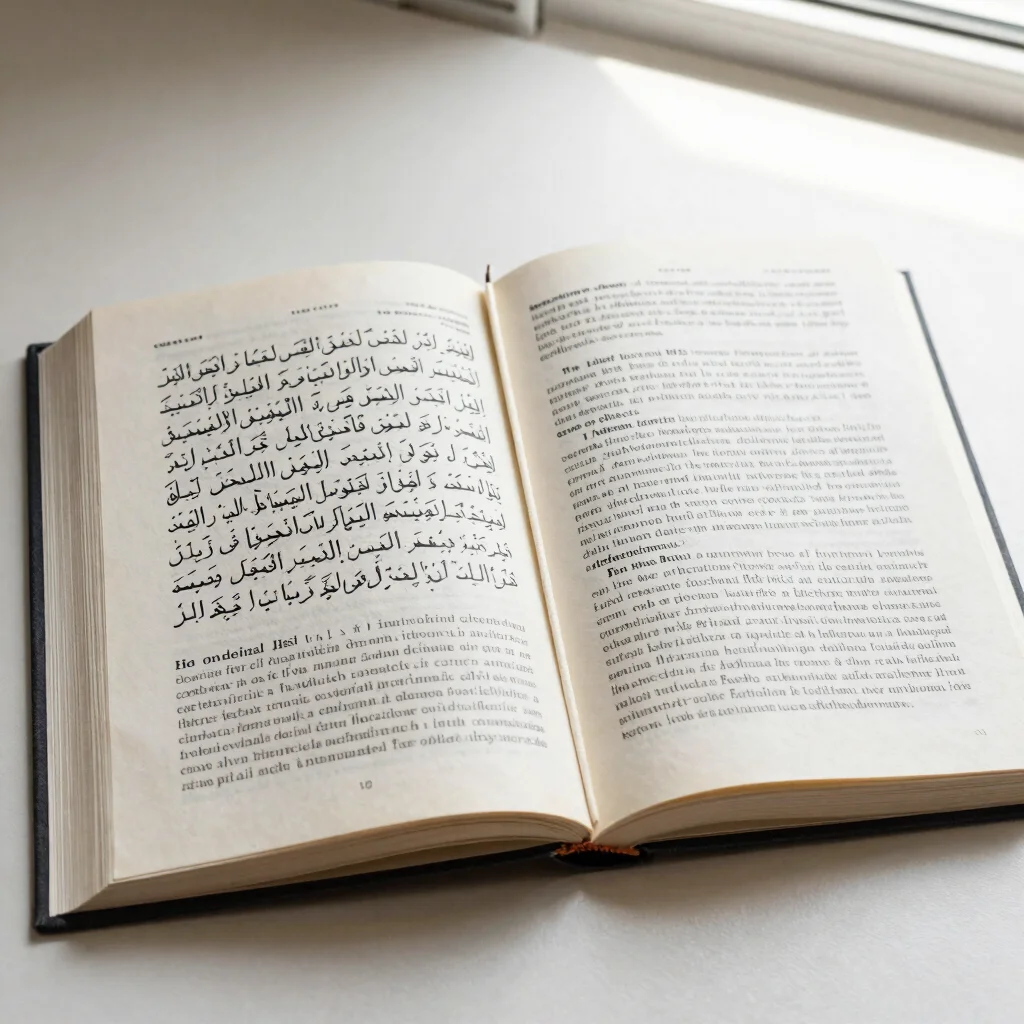
A reader opens a translated novel and meets a sentence that seems perfectly natural. Its ease can conceal the work behind it: a translator has chosen a rhythm, a register, and one phrase among several possible ones. Reading across languages is not a failed attempt to reach an untouched original. It is an encounter shaped by decisions.
Meaning travels with a texture
Words carry more than their dictionary definitions. They arrive with levels of formality, familiar associations, and sounds that alter how a sentence moves. A translator may preserve an image while changing its pace, or choose a plain expression where the source language holds several meanings in tension.
That is not necessarily a flaw to catch. Some differences have no clean equivalent, and a translation must still be a readable work in its own language. The more interesting question is often what the chosen wording brings into focus—and what it necessarily leaves just outside the frame.
Read the choices, not just the plot
When a passage feels unusually formal, intimate, or abrupt, pause over the effect before deciding it is simply the author’s style. A translator’s note, when available, can clarify a difficult choice; comparing two translations can make the range of choices visible. Neither exercise requires fluency in the source language to sharpen attention.
An invitation across languages
For readers approaching Arabic literature through English, the translated page is both a work to enjoy and a meeting point between literary worlds. It can open a door without pretending that nothing changed in the crossing. Read closely, and the book offers two kinds of attention: to the story on the page and to the craft that brought it there.